Premium Steel Doors Manufactured in Britain

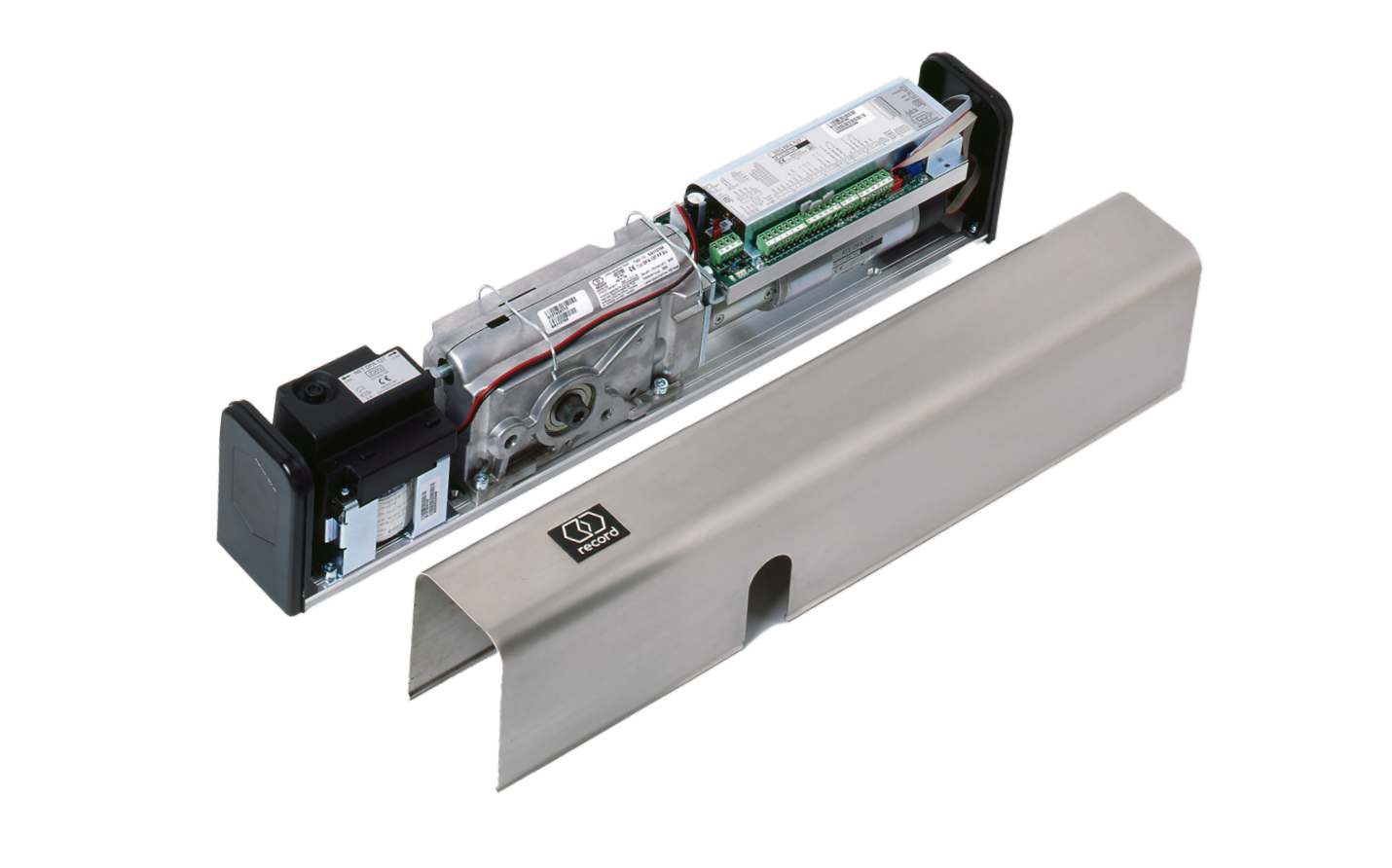
What happens during a power failure? How is the door operated manually?
During a power failure, the door operator functions like a traditional door closer, allowing the door to be opened manually, though it may feel slightly harder than usual. If the door includes an electric lock (e.g., electric strike or maglock), its behaviour will depend on the lock’s configuration:
- Fail-safe locks unlock when power is lost, allowing manual use.
- Fail-secure locks remain locked during a power failure and cannot be opened manually.
What type of locking systems are supported?
You can choose from:
- Electric strike
- Maglock
- Motorised lock
- V-lock
- No lock at all
You can also add a deadlock separately, for example, to secure the door at night. Locking options are independent of the door operator.
How many activations is the unit prepared for?
Our doors are third-party tested to BS6375-2 and classified as Class 4, which is 50,000 cycles.
Is the unit compatible with safety sensors?
Yes, the door operator is compatible with various safety sensors. It is designed to work with the LZR Flatscan, which functions as both a sensor and a laser-based finger guard.
Are seals and finger guards included in the door preparation?
The LZR Flatscan includes a built-in laser finger guard. For non-fire-rated doors, customers may choose to install their own finger guard if they prefer not to use the LZR Flatscan, which can be more expensive.
Seals are not typically included in the standard door preparation and may need to be specified separately, depending on the door type and performance requirements.
Can a push button be used to activate the door?
Yes, but placement depends on the door configuration:
- Pull side: A wall-mounted push button must be placed far from the door.
- Push side: A virtual push button is available via the LZR Flatscan - a sticker is placed on the frame that triggers the door when touched.
Has the door been tested with floor-to-door safety barriers, and do they affect the fire rating?
Testing has only been carried out using the LZR Flatscan sensor, which is believed to function similarly in concept. There are no specific test results available regarding the use of physical floor-to-door safety barriers and their impact on fire ratings.
However, if the barrier is a floor-to-frame installation (not attached to the door itself) and does not interfere with the sensor, it may be acceptable. Attaching any additional components directly to the door would void the fire certification.