Premium Steel Doors Manufactured in Britain

At Strongdor, we believe specifiers deserve the full picture, not just a rating, but a clear understanding of what that rating means in a real fire. With the publication of BS 8214:2026, the industry's primary fire door code of practice has been substantially revised, and its updated smoke control guidance puts full four-sided testing firmly in the spotlight.
Here's what's changed, and why it matters for smoke-rated doors you specify.
What's Changed Under BS 8214:2026
BS 8214:2026 replaces the withdrawn 2016 edition and brings the standard up to date with current legislation, including the Building Safety Act and Fire Safety Act. Its smoke control guidance has been realigned with BS 9991, with renewed emphasis on the performance of the threshold, the bottom edge of the door.
Under the new standard, the message to the industry is clear: the threshold can no longer be treated as a minor detail where smoke control is required. Evidence must match the performance claimed, and that's exactly where the distinction between Sa4 and Sa3 classification becomes critical.
Sa4: Tested Where It Counts
A door achieving Sa4 classification under EN 1634-3:2004 has been tested for smoke leakage performance across all four edges:
- The head
- The threshold
- Both vertical jambs
This is the most comprehensive assessment available, and for good reason: in a real fire, smoke doesn't choose which gaps to exploit. It migrates through any available interface under the pressure differentials a fire generates. Verifying performance on all four sides gives you, and the building's occupants, a true picture of a doorset's effectiveness as a smoke-control barrier.
Where Sa3 Falls Short
Under an Sa3 classification, smoke leakage is only assessed on the head and vertical jambs, with the threshold sealed using a caulked interface during testing. This is permitted within EN 1634-3 for limited-scope testing, for example, when a seal manufacturer is validating perimeter seals in isolation, with the threshold outside the test scope.
The issue is that Sa3 doesn't represent real-world operating conditions. A doorset in service must function day-to-day without a sealed threshold, and under fire-induced pressure, smoke will find the bottom edge just as readily as any other gap. Excluding the threshold from assessment leaves a genuine blind spot in a door's actual smoke-control performance, one that BS 8214:2026 now makes much harder to overlook.
What This Means for Specifiers and Buyers
Products are still sometimes marketed simply as "Sa-rated" — but that label alone no longer tells you enough. With BS 8214:2026 placing fresh scrutiny on threshold performance, it's more important than ever to:
- Request the full EN 1634-3 test evidence
- Confirm whether the doorset has been classified to Sa4 or Sa3
- Check that the test covers all four edges, including the threshold
- Treat Sa3-only evidence with caution
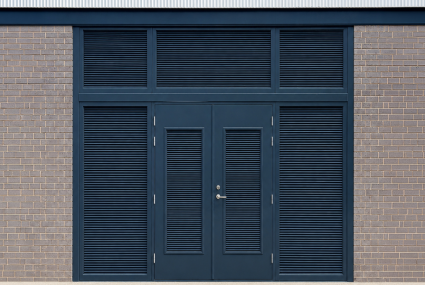
Our new certified internal smoke and fire-rated steel door achieves Sa4 classification — tested across all four edges, with no threshold required and full DDA compliance as standard.
Want to know more about our smoke and fire-rated steel door range, or how we can support your next project? Speak to the Strongdor team or request a technical data sheet today.